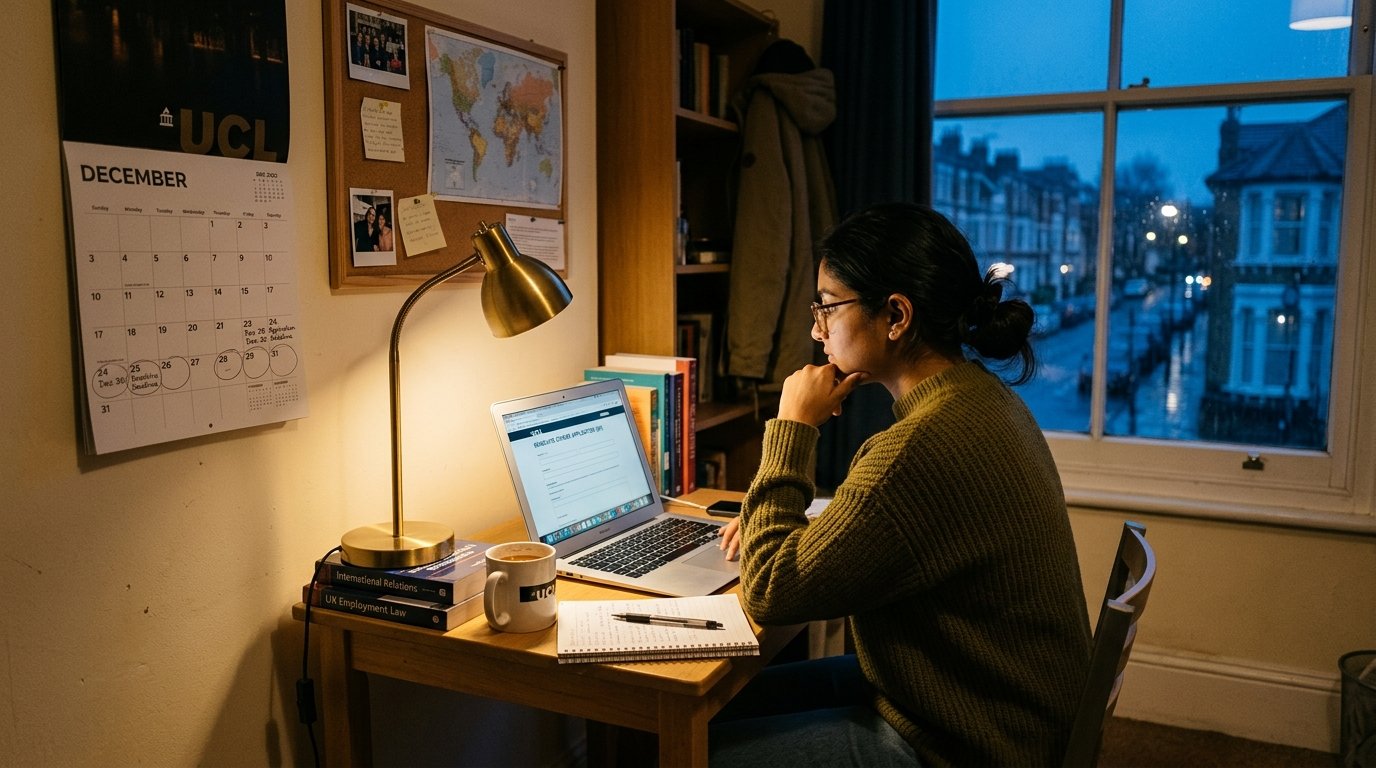
UK Graduate Route Deadline: Apply by 31 December 2026
If you are finishing a UK degree this year, one date now decides whether you get two years in the UK or eighteen months: 31 December 2026. It is not the date your course ends, not the date of your graduation ceremony, and not the date the Home Office makes its decision. It is the date your Graduate Route application is submitted.
And that is where most students are going to lose six months — not by missing the news, but by missing a paperwork step in November.
Quick answer: The UK Graduate Route currently gives bachelor’s and master’s graduates two years of post-study permission if the application is submitted on or before 31 December 2026. Applications submitted on or after 1 January 2027 will receive 18 months instead. PhD and other doctoral graduates are unaffected and continue to receive three years. The trigger is the submission date, not the course completion date.
What changes on 1 January 2027
This is not a proposal, a consultation, or a rumour circulating in student group chats. Following the May 2025 immigration white paper, the Home Office laid a Statement of Changes in Immigration Rules on 14 October 2025 confirming that, for applications made on or after 1 January 2027, the standard Graduate visa duration will be reduced to 18 months for non-PhD graduates. The legal mechanism implementing the change has already been published.
The reasoning given is employability-driven. The government’s stated hope is that a shorter grant will push Graduate visa holders into graduate-level roles faster — the route was designed as a bridge into sponsored skilled employment, not as a long-term work visa in itself.
Whether that logic holds is debatable. Legal commentators have pointed out the practical squeeze: a student graduating in June under the 18-month rule would see permission expire around December of the following year, which for professions with fixed September start dates — law being the obvious example — can mean the visa runs out before the job begins.
Nothing has softened since. The Home Office republished its Graduate route caseworker guidance on 3 August 2026, and the January commencement date stands.
The date that counts is the date you submit
This is the single most misunderstood part of the change, and it cuts both ways.
The trigger is the application submission date — not the date your Student visa ends, not the date your course completes. Your degree can finish in September, your certificate can arrive in March, your decision can land in February 2027 — none of that matters. If a valid application reached UKVI on or before 31 December 2026, you are in the two-year cohort.
But “submitted” means validly submitted. That distinction is doing enormous work here. An application missing the fee, the Immigration Health Surcharge, biometrics or correct identity evidence can be treated as invalid — and an application ultimately treated as invalid may not provide Section 3C protection, which matters a great deal if your Student permission is close to expiry. Submitting something before your Student visa expires is not the same as making a valid application.
Leave it until 29 December and a single rejected payment can move you into 2027.
The real deadline is your university, not the Home Office
You cannot apply whenever you like. Your education provider must notify the Home Office that you have successfully completed your course before you apply. You can apply from the day your institution confirms your successful completion to you, up until the end date of your current Student permission.
So your practical deadline is not 31 December. It is the date your exam board sits and your university reports your completion to UKVI — and for autumn-submitting master’s students, that confirmation often lands in November or December, immediately before the Christmas closure period.
Universities are blunt about the consequence of jumping the gun. Warwick, for example, warns students not to apply until they receive the specific email confirming they can — applying before that notification results in refusal, with no refund of the application fee
Action for anyone finishing in 2026: email your international student advice team this month and ask two questions. When does my board of examiners sit? When will completion be reported to UKVI? Those two dates are your real calendar.
Five ways students will lose the two-year window by accident
1. Flying home for Christmas with a pending application
This is the expensive one, and almost nobody is talking about it.
If you travel outside the Common Travel Area while your Graduate route application is pending, the application is automatically withdrawn on the day you leave. You would then need to re-apply and pay the application fee again — only the Immigration Health Surcharge from the first application is refunded. This is set out at paragraph 34K of the Immigration Rules.
Now run the arithmetic for December 2026. You apply on 15 December. You fly home on 22 December for the winter break. Your application is withdrawn on 22 December. You return in January and re-apply — and that new application, submitted in 2027, gets 18 months. One flight, six months gone, plus a lost fee.
The safe sequencing, as Leeds advises its students, is to finish the travel first and start the application after you are back in the UK — or wait for the grant before booking anything. There is one wrinkle: if your university has already withdrawn Student visa sponsorship because you completed early, you cannot use that visa to re-enter, so you must wait for the Graduate visa either way.
2. Letting Student permission expire first
Your Student or Tier 4 visa must still be valid on the date you apply. Miss that and the route closes entirely — you don’t get 18 months, you get nothing. You also lose the opportunity if you are not awarded your degree before your Student visa expires.
Check your eVisa expiry date today, not in November. For a one-year master’s, permission typically runs roughly four months past the course end date, which for many 2025-start students means an expiry in the first weeks of 2027 — uncomfortably close to the wire.
3. Waiting for the ceremony or the certificate
You do not need either. You can apply as soon as your university confirms course completion to the Home Office — do not wait for the graduation ceremony or the physical certificate. You do not normally need to submit a degree certificate to prove completion; the Home Office relies on the provider’s notification.
Students routinely wait for the gown-and-photograph moment in the spring. In 2026, that habit costs six months.
4. Resits and deferred assessments
If you fail a module and resit, your completion confirmation slides — potentially into spring 2027, which puts you squarely in the 18-month cohort. There is no workaround and no discretion here. If you are sitting a referred assessment this autumn, talk to your department about the earliest possible board date, and plan your job search on the assumption of the shorter grant.
5. Assuming the deadline is the decision date
It is not, and the confusion runs the other way too. You do not need a decision before 1 January — you need a submission. Decisions usually take up to eight weeks, and you can remain in the UK while you wait, even if your Student visa expires in the meantime. If you need speed for a job offer, priority (£500) and super priority (£1,000) services are available when applying through the ID Check app.
What the extra six months actually costs
The application fee is £937 and the Immigration Health Surcharge is £1,035 per year of permission. A two-year Graduate visa costs £3,007 in total, an 18-month grant £2,489.50, and a three-year doctoral grant £4,042. Both the fee and the surcharge are paid in full at the point of application, and dependants pay their own.
So the two-year route costs roughly £518 more than the 18-month one — for six additional months of unrestricted UK work rights. That is under £90 per extra month of permission, which is a very good deal by any measure, and worth remembering if you are tempted to delay for cash-flow reasons.
Two cost notes people miss. The Graduate route surcharge is charged at the standard adult rate of £1,035 a year — higher than the discounted £776 student rate you paid before, so budget more than you did for your Student visa. And published IHS figures for the 18-month grant vary between university pages, so confirm the exact amount on GOV.UK before you pay.
Finishing in 2027? Build your plan around 18 months
If your course ends after the cut-off, the six months are gone and no amount of paperwork recovers them. What changes is how early the job search has to start — because the route that follows has got harder at the same time.
Since 22 July 2025, the Skilled Worker route requires sponsored roles to sit at RQF Level 6 — bachelor’s degree level or above, and the general salary threshold is £41,700, or the going rate for the occupation, whichever is higher. Around 180 occupation codes were removed from the eligible list when that skill threshold came in.
The concession that matters most to graduates is the new entrant rate. A qualifying new entrant — a category that can include current and recent Students and Graduates — can generally rely on a salary of at least £33,400 and 70% of the applicable going rate, though new entrant status is capped at a total of four years. English must now be demonstrated at B2 rather than B1.
There is also a second deadline hiding in the same month. For occupations relying on the Temporary Shortage List, the Certificate of Sponsorship must be issued before 31 December 2026 — so if your target role is a medium-skilled one kept alive by that list, your employer’s timeline is as tight as yours.
Practically, an 18-month runway means starting sponsored-role applications during your final term, not after results. Filter employers by whether they hold a sponsor licence before you apply, not at offer stage. And note what the Graduate Route does not do: it cannot be extended, and permission under it does not itself lead to settlement.
Your timeline from now to 31 December 2026
August–September: Confirm your exam board date and your completion-reporting date with your university. Check your Student visa expiry on your UKVI account. Create the account now if you don’t have one.
October: Save £937 plus £2,070 IHS, ready to pay in one go. Applications fail on payment problems more often than on eligibility.
November: Do not book December flights home until you know your confirmation date. If you must travel, travel before you apply.
On confirmation day: Apply. Same week, ideally same day. Every day of delay is exposure to something going wrong.
December: Treat 31 December as fictional. Treat mid-December as the deadline, because UKVI support, university advice teams and your own bank all slow down over the holidays.
Key Takeaways
- Applications submitted on or before 31 December 2026 get two years; from 1 January 2027, 18 months for bachelor’s and master’s graduates. PhDs keep three years.
- The submission date decides it — not your course end date, not the decision date.
- You cannot apply until your university confirms completion to the Home Office, so that date is your real deadline.
- Do not leave the Common Travel Area with an application pending: it is automatically withdrawn and you lose the fee.
- Two years costs about £518 more than 18 months in surcharge — roughly £90 per extra month of permission.
- If you finish after the cut-off, plan an 18-month runway and target sponsor-licensed employers from your final term.
Related guides
- Shaikh Zayed Civil Engineer Jobs: Vacancy Verification Guide
- Shaikh Zayed General Store Officer: Vacancy Verification Guide
Official guidance to check
Check GOV.UK Skilled Worker visa requirements for the applicable route and current requirements. This resource is general guidance; it does not confirm that a particular vacancy is open or that an employer will sponsor your application.